


Fall Mullet Run 2026 Timing Hotspots and Best Baits for Snook Redfish Tarpon More

When the first big schools of finger mullet push down the coast, the water changes fast. Calm shorelines turn nervous. Pelicans start tracking the surface. Snook slide into washouts, tarpon roll just outside the breakers, and jacks crash bait so hard it sounds like someone dropped a cinder block in the surf.
The fall mullet run is one of the most exciting migrations on the Atlantic side of Florida. Each year, millions of mullet move from north to south as summer gives way to fall. For anglers, it creates a short, intense window when nearly every major inshore and nearshore predator keys in on the same food source.
For 2026, the broad timing should look familiar: August through October, with the strongest waves of action often building through September and peaking around early fall weather changes. The exact day-to-day bite will depend on tides, wind, water clarity, rainfall, and how the bait moves through the Indian River Lagoon, nearby beaches, and the inlets that connect them.

The fall mullet run is a moving buffet
Mullet are built for this migration. As daylight changes and seasonal conditions shift, schools gather and move south along shorelines, through lagoons, around bridges, and along beaches. Some schools hold tight to structure. Others pour down the sand in thick, dark ribbons.
That movement matters because mullet are a major food source. They are oily, visible, and often packed close together. Predators do not need to hunt randomly when millions of baitfish are passing through.
During the run, anglers may see different kinds of mullet schools:
Finger mullet
Small bait in the 3- to 6-inch range. These are prime targets for snook, trout, redfish, jacks, mangrove snapper, and juvenile tarpon.
Medium mullet
Bigger baits that draw larger snook, tarpon, bull redfish, sharks, and kingfish near the beaches.
Large adult mullet
Less practical for some inshore setups, but still important because they pull in the heaviest predators.
The most productive fishing often happens around edges. Look for bait getting pushed against seawalls, mangrove shorelines, sandbars, docks, points, bridge pilings, and inlet rocks. Open-water schools can hold fish, but bait that gets trapped is usually easier for predators to attack and easier for anglers to read.
The 2026 timing should build from August through October
The fall mullet run does not start everywhere at once. It comes in waves, and the best fishing often follows those pulses.
In a typical year, August brings the early signs. Small schools begin showing in canals, backwaters, lagoon shorelines, and near inlets. The heat can still be intense, so low-light periods often matter most. Dawn, dusk, cloudy periods, and moving water tend to outfish bright, still afternoons.
September usually brings more consistent movement. Schools become easier to spot along beaches and inside the Indian River Lagoon. Early cool fronts, even mild ones, can help trigger stronger pushes of bait. After a northeast breeze or a shift in weather, it is common to find new schools where there were none the day before.
October can be excellent, especially for larger predators. By then, the migration has often stacked bait along beaches, inlets, and lagoon choke points. This is also when red drum activity becomes a major piece of the pattern, with fish ranging from slot-size reds inshore to oversized red drum around deeper edges and inlets.
A simple way to think about the season:
Period | What often changes | Best places to check |
August | Early bait movement and scattered schools | Lagoon shorelines, canals, docks, mangroves |
September | Stronger pushes of mullet and more surface feeding | Beaches, flats, bridges, inlet areas |
October | Bigger predators and red drum opportunities | Inlets, deeper lagoon edges, surf troughs |
The calendar helps, but the water tells the truth. If birds are dipping, bait is showering, or the surface looks like it is trembling, stop and watch before making a cast.
The Indian River Lagoon offers protected-water opportunities
The Indian River Lagoon can be one of the best places to fish the mullet run because it gives baitfish miles of shoreline and structure to follow. It also gives anglers options when the ocean gets rough.
During the run, mullet may travel along mangrove edges, spoil islands, docks, seawalls, flats, and deeper channels. Predator fish use these same features as ambush points. A school of mullet moving across a wide flat may look impressive, but the bite often turns on when that school reaches a point, drain, dock line, or drop-off.
Prime lagoon targets include snook, redfish, seatrout, jack crevalles, and tarpon. The mix can change by depth and time of day.
Snook often hold tight to structure. They like current, shade, and ambush lanes. During the mullet run, a live bait drifted along a dock face, bridge shadow, or mangrove point can get crushed.
Redfish may tail, push wakes, or follow bait along shallow flats. In late September and October, red drum activity becomes more noticeable. Some fish will be smaller school-size reds, while others may be upper-slot or oversized fish using deeper lagoon edges and passes.
Seatrout often sit near grass, sandy potholes, and drop-offs. They may not always blow up on mullet as violently as jacks or snook, but they feed heavily on smaller bait.
Tarpon may roll around bridges, deeper channels, and open lagoon areas where bait funnels through. Even smaller tarpon can be selective, so natural presentation matters.

Beaches and inlets can produce the most explosive feeds
The beach side of the mullet run delivers the kind of fishing people talk about all year. Bait schools slide down the sand, predators pin them against the shoreline, and the surface erupts.
Surf anglers should look for more than just mullet. Read the whole scene.
Good signs include:
Birds diving in one tight area
Mullet showering out of the water
Dark bait pods moving parallel to shore
Sudden whitewater outside a calm trough
Jacks or tarpon blasting through bait
Sharks cruising behind schools
Snook often feed right in the wash, sometimes only a rod length from dry sand. Casting too far can miss fish that are tucked inside the first trough. A live bait, soft plastic, swimbait, or swimming plug worked along the edge of the school can draw strikes.
Tarpon may sit farther off the beach, especially around larger bait pods. Long casts help, but placement matters more than distance. Put the bait ahead of the moving school rather than right into the middle of it.
Sharks follow the run closely. Blacktips, spinners, and other coastal sharks often attack mullet schools in the surf. Use appropriate tackle if targeting them, and handle all sharks with care.
Kingfish can show near beaches and inlets when clean water and bait line up. A lively bait fished on the outside edge of a school can be the difference between a slow morning and a smoking drag.
Inlets concentrate everything. Water movement squeezes bait through a narrow zone, and predators know it. Snook, tarpon, big jacks, redfish, sharks, and kingfish may all use the same inlet system during peak migration. Strong current can make fishing harder, but it also sets up clear feeding lanes.
The predator lineup changes by place and tide
One reason the fall run is so addictive is the variety. A single morning can produce several species without changing much more than bait size or casting angle.
Predator | Where to look | What to watch for |
Snook | Inlets, docks, bridges, beach troughs | Bait tight to structure or washouts |
Redfish | Flats, mangroves, inlet edges | Wakes, pushing water, bait scattering low |
Seatrout | Grass edges, potholes, deeper flats | Small mullet and pilchards over broken bottom |
Tarpon | Beaches, bridges, channels, inlets | Rolling fish and bait dimpling near depth changes |
Sharks | Surf, inlet mouths, outside bait pods | Fast cuts through schools and fleeing mullet |
Kingfish | Clean beach water, inlet edges | Bait near deeper water and surface slashes |
Jack crevalles | Beaches, seawalls, lagoon shorelines | Loud, fast surface explosions |
Jack crevalles deserve special mention. They can be chaotic, loud, and hard on tackle, but they also help anglers find the run. If jacks are crushing bait along a seawall or beach, other predators may be nearby, feeding lower or later in the tide.
Tide matters. Incoming water can bring clean water and fresh bait into inlets and lagoon cuts. Outgoing water can flush mullet from backwaters and canals. Neither is always better. The key is moving water that positions bait where predators can trap it.
The best bait is not always a mullet
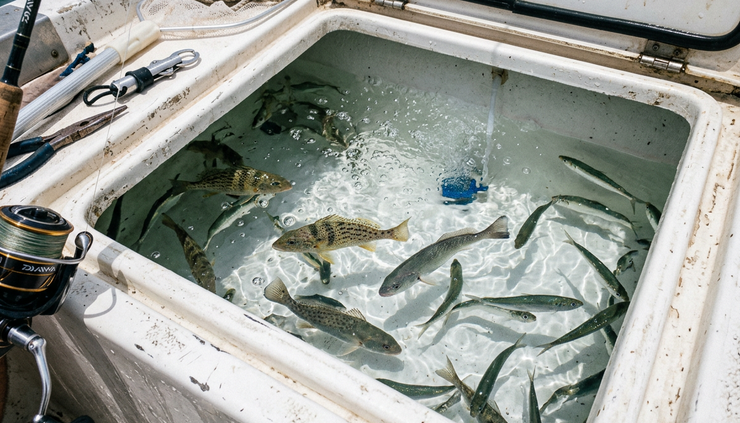
Live mullet are the obvious choice during the run, and they work. A lively finger mullet free-lined along a shoreline, drifted through an inlet, or slow-trolled near a beach school can be deadly.
Still, mullet are not the only option. At times, predators get so focused on huge schools that one more mullet in the crowd gets ignored. At other times, bait is hard to catch, too large, or too beat up to fish well. That is when alternatives shine.
Pigfish are excellent around grass, docks, and deeper structure. Snook, trout, and redfish rarely pass up a healthy pigfish with a natural kick.
Croakers work well on the bottom or near current seams. They can tempt redfish, snook, trout, and larger predators holding below surface activity.
Pilchards are useful when fish are feeding on smaller bait mixed with mullet. They also work well as chum when legal and practical, especially around structure.
Cut bait can be the right call when redfish, sharks, jacks, and other scent-driven feeders are around. Fresh cut mullet, ladyfish, or other legal bait can sit in a strike zone while live baits get swept away.
Match the bait to the situation:
Use live finger mullet when predators are chasing moving schools.
Use pigfish near structure and grass when fish are holding tight.
Use croakers when redfish or snook are feeding lower in the water.
Use pilchards when fish are keyed on smaller bait.
Use cut bait when visibility is poor or fish are tracking scent.
Keep bait lively. During warm early-season conditions, overcrowded bait wells and low oxygen can ruin a trip. A smaller number of healthy baits will outfish a packed well of weak ones.
Red drum become a major late-season target
By late September and October, red drum deserve extra attention. This is when anglers often see more redfish activity tied to bait movement, tide changes, and inlet patterns.
Size can vary a lot. Shallow lagoon shorelines may hold smaller schooling reds and slot-size fish. Around deeper cuts, bridges, inlet edges, and adjacent flats, larger red drum may show up. Some are too large to keep under common regulations, so measure carefully, handle them gently, and check current rules before fishing. Unfortunately in our area of the Indian River Lagoon and adjacent state waters redfish are off limits to harvest.
Reds often feed differently than snook or jacks. They may not always explode on the surface. Instead, they push, root, wake, or pick off injured bait. A cut bait placed along a travel lane can be just as effective as a live bait cast at a visible fish.
For bigger red drum, heavier tackle helps shorten the fight and improve release success. Use enough rod, reel, and leader to control the fish, especially around current and structure.

A smart game plan beats blind casting
The mullet run rewards anglers who move with the bait instead of waiting for fish to appear in one fixed spot. Pick a zone, then keep checking the conditions.
A strong plan for a morning trip might look like this:
Start at first light near a lagoon shoreline, bridge, or beach access.
Watch for bait movement before making repeated casts.
Fish the edges of schools, not the center of the bait ball.
Change bait size if predators follow but do not commit.
Shift to an inlet or deeper edge as tide speed increases.
Keep one heavier setup ready for tarpon, sharks, jacks, or big reds.
Do not overlook quiet water near chaos. When jacks and sharks are blasting the surface, snook and redfish may feed below or along the outside edge. A bait dropped behind the main action can find the better fish.
Also, respect the resource. Use circle hooks when appropriate, minimize time out of the water, revive large fish in current, and know the current seasons, size limits, and gear rules for the area being fished.
The best days are built around bait, tide, and timing
The Fall Mullet Run 2026 should bring the same kind of high-energy fishing that makes this migration a highlight of the year. August will likely start the pattern, September should build the most consistent movement, and October can deliver memorable shots at red drum, tarpon, snook, sharks, kingfish, trout, jacks, and more.
Focus on the places that gather bait: the Indian River Lagoon, beaches, bridges, seawalls, mangrove points, surf troughs, and inlets. Carry more than one bait option. Mullet may be the headline, but pigfish, croakers, pilchards, and fresh cut bait can save the day when fish get picky.
The run is short, and every tide is a new chance. Watch the water, follow the birds, fish the edges, and be ready when the surface starts to shake.


Comments